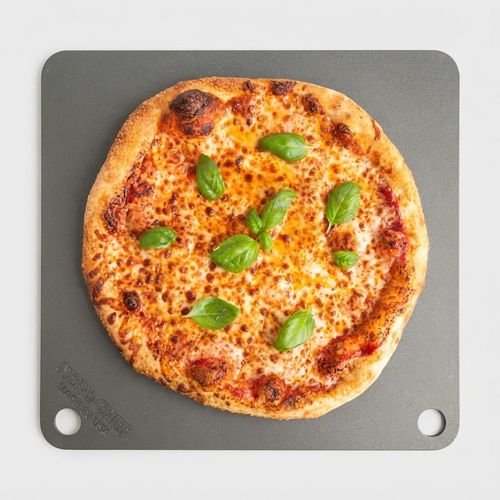
Solid carbon steel · Made for home ovens

NerdChef Pizza Steel: A Solid Carbon-Steel Baking Surface for Home Ovens

Cracked ceramic stones and soggy centers are why most home cooks give up on oven pizza, and why NerdChef bakes on solid carbon steel that moves heat roughly 20 times faster than ceramic. 2,460 verified buyers rate these plates 4.7★, though nobody prints the catch on the box: the steel needs a 45-minute head start.

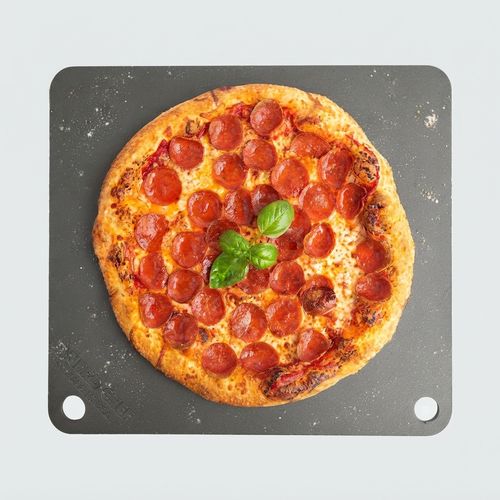
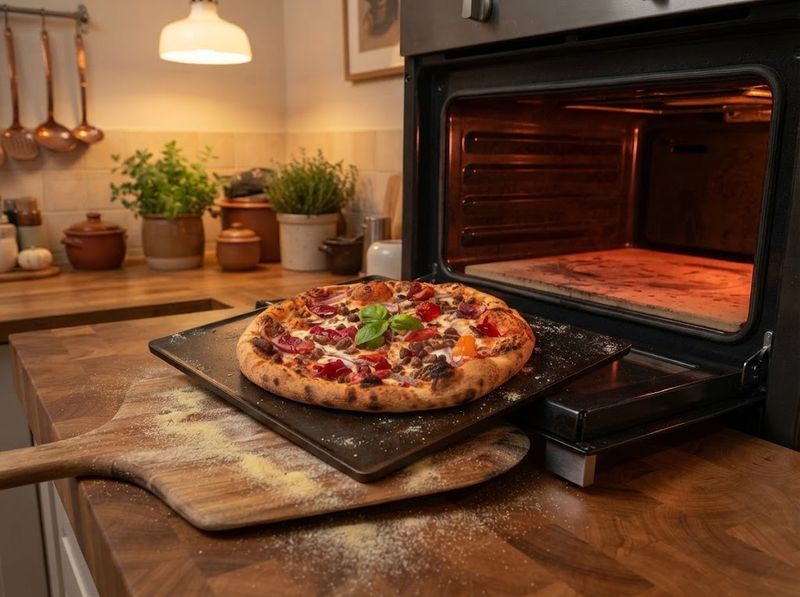
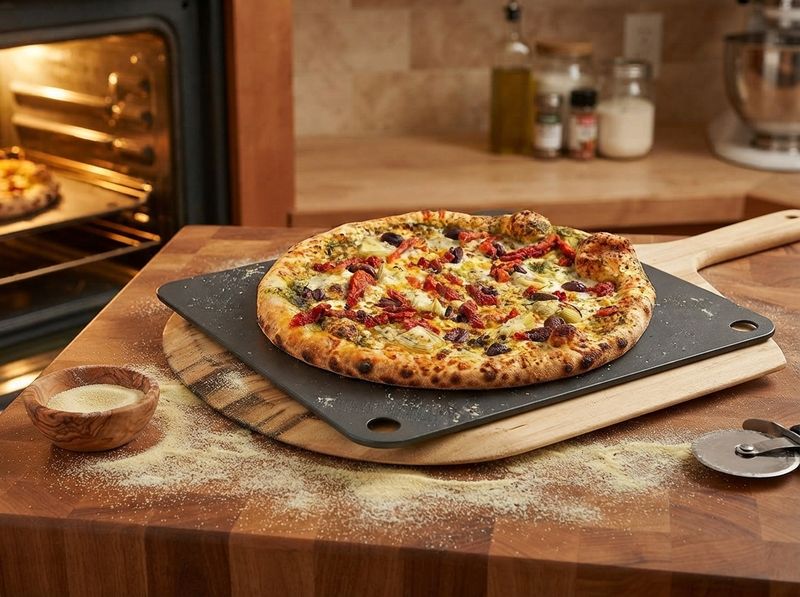
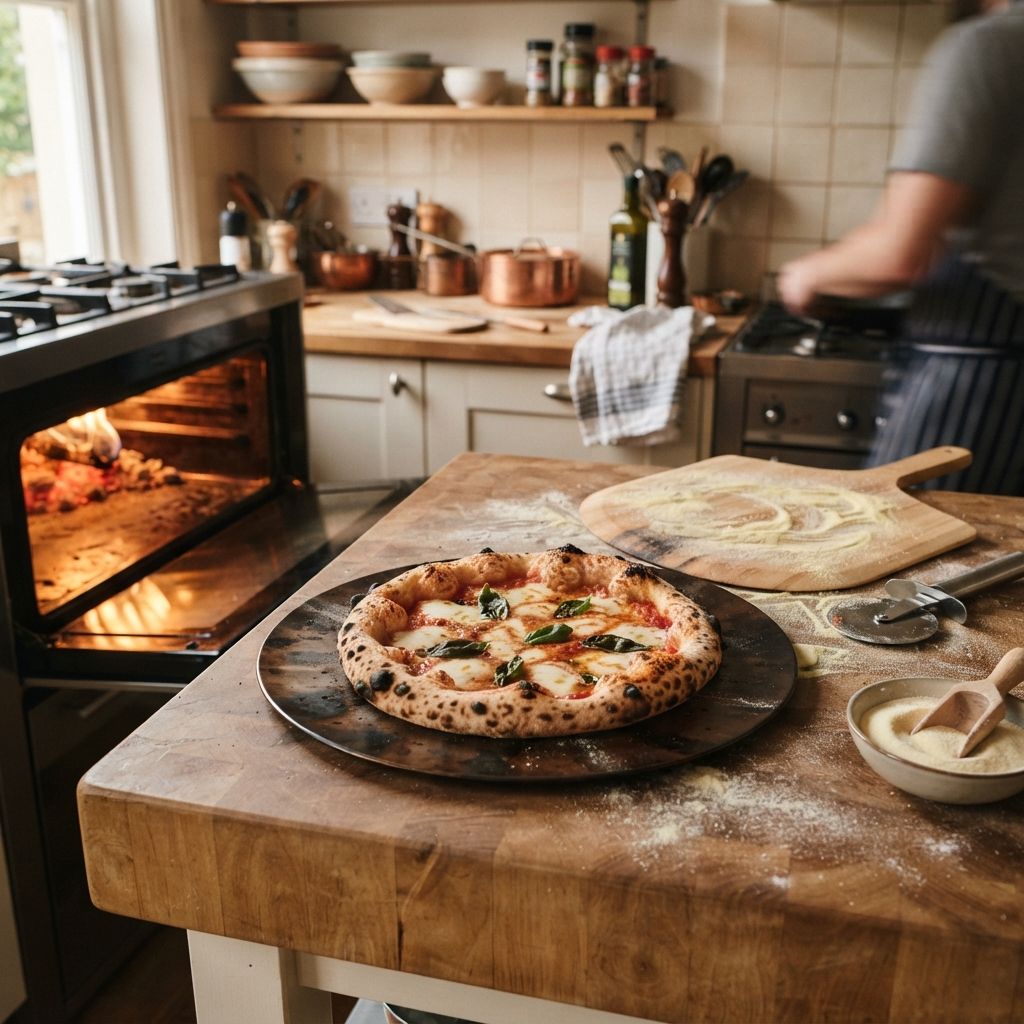
Slide a stretched dough straight onto the preheated plate. You get the blistered, oven-spring crust of a 1000°F wood-fired oven from a home dial set at 450°F. Your crust base sets before the sauce weeps moisture into the middle. That fast heat dump is what a ceramic stone cannot deliver, and it is where the soggy center starts.

  • Pull your pie 6 to 8 minutes after launch, once the plate is fully heat-saturated at 500°F.
  • Skip the annual stone replacement: solid steel will not crack, and every plate carries a brand-stated guaranteed-for-life claim against breakage.
  • Leave the 16-lb Standard plate on your rack full time and it doubles as a heat sink for bread, pita, and frozen pizza.
Verified buyer rating
4.7★ / 2,460 reviews
Plate temperature rating
1000°F
Against breakage
Guaranteed for life

What every plate ships with

  • Guaranteed for lifeA brand-stated promise against breakage on every plate.
  • Made in USAThe flat Steel Stone plates are manufactured stateside.
  • Ships pre-seasonedA flaxseed-oil cure is baked on before the box leaves.
  • 30-day returnsTest the fit on your rack through the retailer’s standard window.

Our Products

Every plate here runs solid carbon steel from 15 to 32 lbs, sized to sit on a standard home oven rack.

NerdChef Steel Stone Standard, quarter-inch pizza steel

Steel Stone Standard (.25" Thick)

4.7 (915 verified reviews)

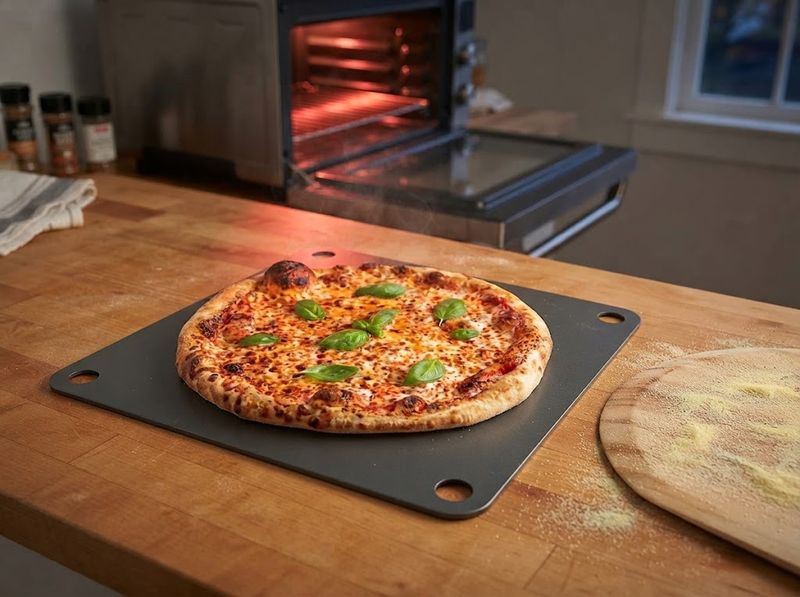
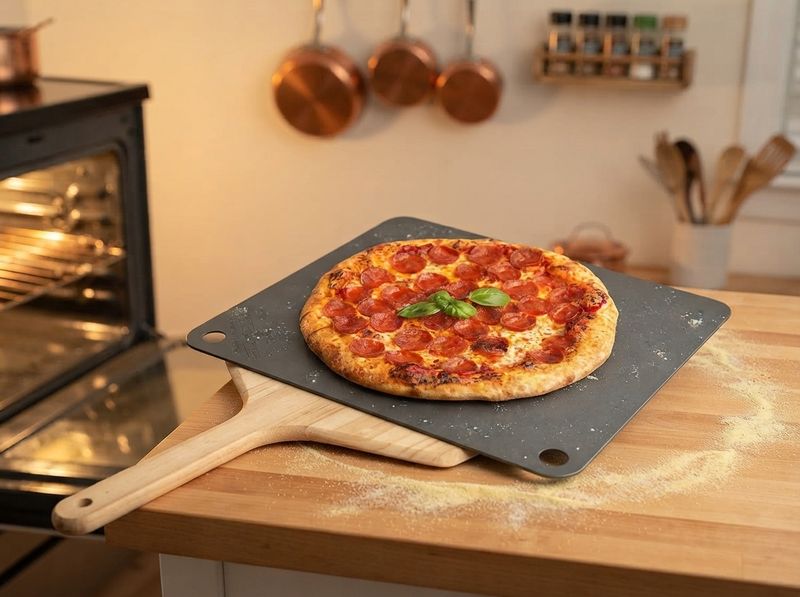
Slide the 16-lb Standard plate onto a rack in a compact apartment oven and it clears the cavity at 16 by 14.25 inches, without scraping the back wall. At a quarter inch thick it saturates faster than the heavier plates. That suits a cook who wants pizza on a Tuesday, not a scheduled bake. Where a ceramic stone of the same footprint caps near 500°F and eventually cracks, this plate carries a 1000°F rating. Finger holes are cut straight into the steel for moving it. 915 verified buyers rate it 4.7 stars. Entry weight, full performance: check today's price.

  • Clears a standard 30-inch oven cavity at 16 by 14.25 inches and 16 lbs on the rack
  • A quarter-inch plate saturates faster than thicker steel, so preheat lands at the short end of 45 to 90 minutes
  • 4.7 stars across 915 verified buyer reviews
Check today’s price
NerdChef Steel Stone Pro, three-eighths-inch pizza steel

Steel Stone Pro (.375" Thick)

4.7 (961 verified reviews)

Set the 23-lb Pro plate on the rack and it splits the difference the other thicknesses argue over. At three-eighths of an inch it stores enough heat for a full pizza night, with none of the two-person lift the flagship demands. Preheat lands mid-window. Where the quarter-inch plate cools noticeably by the third pie, this one holds steady. Where the half-inch plate needs a shoulder and a plan, this one moves on the finger holes. 961 verified buyers rate it 4.7 stars, more than any other plate here. Made in USA. Check today's price.

  • 23 lbs holds heat through a full pizza night and still lifts with one person
  • Three-eighths of an inch stores more heat than the entry plate without the flagship's preheat penalty
  • 4.7 stars across 961 verified buyer reviews, the most-reviewed plate here
Check today’s price
NerdChef Steel Stone Ultimate, half-inch pizza steel

Steel Stone Ultimate (.50" Thick)

4.7 (355 verified reviews)

Load 32 lbs of solid steel onto the middle rack once and most owners never take it out again. Double the mass of the entry plate means double the stored heat, so the third pie launches onto a surface as hot as the first one had. It also means a longer wait: plan the full 90 minutes of preheat before the first bake. Where a thin plate gives up its surface heat to every cold dough, this one barely registers the loss. Where a ceramic stone eventually cracks under that thermal cycling, solid steel does not. 355 verified buyers rate it 4.7 stars. Flagship weight and a genuine two-hand lift: check today's price.

  • 32 lbs of solid steel holds temperature through four back-to-back launches
  • Double the mass of the entry plate stores double the heat, at the cost of a full 90-minute preheat
  • Rated to 1000°F where most ceramic stones cap near 500°F
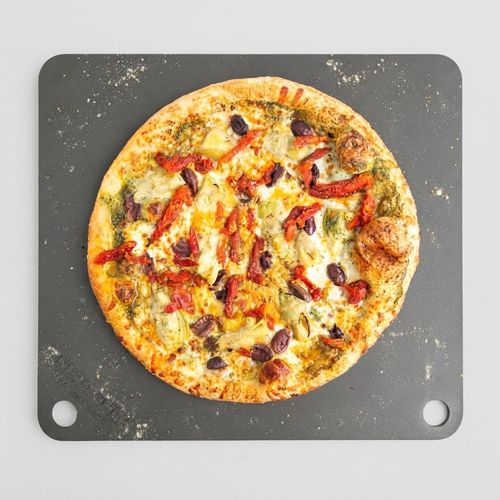
Check today’s price
NerdChef Speed Steel, finned cast pizza baking plate

Speed Steel (Finned & Handled)

4.5 (229 verified reviews)

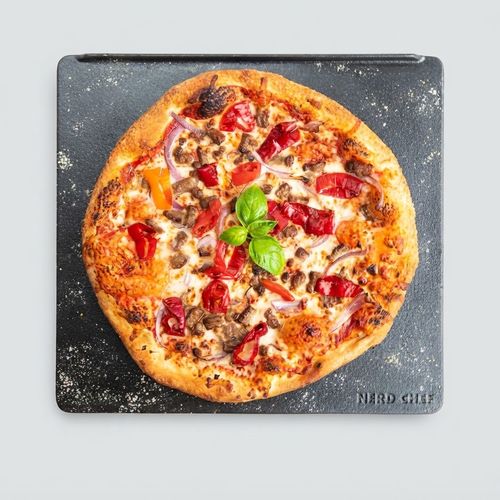
Grab the underside handles with both hands and the 15-lb cast plate lifts out cold, with no scraper or towel wedge involved. Cast fins across the underside pull oven air over more steel surface, so it reheats between pies faster than a flat slab of the same weight. A raised backstop at the rear catches a pizza that overshoots the launch. Where flat steel gives you nothing to grip, this one carries handles and a lip; where a ceramic stone would crack, cast steel warps at worst. 229 verified buyers rate it 4.5 stars, and the recurring complaint is rust in the finned underside. Dry it fully. Check today's price.

  • Underside handles and a rear backstop on a 15-lb cast plate measuring 14.5 by 13.5 inches
  • Fins add surface area, so the plate recovers heat between back-to-back launches
  • Guaranteed for life against breakage; the failure mode to prevent is rust, not cracking
Check today’s price

Why Steel Beats the Stone Already in Your Oven

NerdChef owners land on the same handful of reasons for leaving ceramic, and each one has a spec-sheet number behind it.

Toss the Cracked Stone for Good

Toss the third cracked ceramic stone, as one owner did, and the pattern is clear: thermal shock splits ceramic. Solid steel has no crack path.

Pull the Pie Before the Timer Hits Ten

One owner clocks 10 minutes at 500°F on the finned plate, start to finish. A saturated plate never makes you wait out a ceramic stone's longer bake.

Measured Against Ceramic, Not Guessed

Steel moves roughly 20 times more heat into the crust than ceramic and holds twice the heat capacity, measured off the manufacturer spec rather than a taste test.

Cracking Is Not a Failure Mode Here

Every plate carries a brand-stated 'guaranteed for life' claim against breakage. Read it as a promise on solid steel rather than a filed warranty, then plan for rust instead, which a dry towel handles in 30 seconds.

Match the Plate Weight to Your Lift

The flagship plate carries 32 lbs of steel; the entry plate carries 16. Pick by what you can hoist into a hot oven, not by the thickest number on the shelf.

Sunday Dough Slides Straight Off the Peel

Picture the first Sunday pie: stretched dough leaves the peel onto a flaxseed-seasoned surface, sanded smooth so nothing grabs or tears on the way down.

From Cold Oven to Blistered Crust

A NerdChef plate needs 45 to 90 minutes of preheat before the first bake, and almost nothing from you after that.

  1. 1

    Preheat Long, Not Hot

    Set 500 to 550°F, then wait 45 to 90 minutes. The oven's ready beep arrives long before the steel is saturated.

  2. 2

    Launch the Dough

    Dust the peel with semolina and slide the stretched dough straight onto the bare, factory-seasoned plate.

  3. 3

    Finish Under the Broiler

    On the finned Speed Steel, preheat lower near 400°F, then run the broiler to max before the pizza goes in.

  4. 4

    Dry It, Do Not Soak It

    Scrape while warm, skip the soap soak, dry it fully. Re-oil the surface whenever it looks dry or shows rust spots.

What the Steel Does That a Stone Cannot

Four bakes explain the whole plate: back-to-back pies, a broiler finish, sourdough, and the one job steel loses outright.

NerdChef Speed Steel, finned cast pizza baking plate

Back-to-Back Pies Without the Cooldown Gap

Speed Steel casts fins across its underside, and those fins are why the second and third pies bake as fast as the first. One owner reports roughly 45 minutes of preheat, then a perfect char on the bottom. The plate is back to temperature in the two or three minutes it takes to build the next pizza. A flat slab loses surface heat to every cold dough and needs longer to recover. Fins pull oven air across more steel surface, so recovery happens while you are still saucing.

  • Build the next pie on the counter while the plate recovers: two or three minutes is all it takes between launches.
  • Underside fins add surface area, so oven air reheats the plate faster than a flat slab of the same 15-lb weight.
  • Where a cold dough strips surface heat from any plate, the fins put it back before the peel is loaded again.
See the Speed Steel (Finned Handled)
NerdChef Steel Stone Ultimate, half-inch pizza steel

Push the Oven to Its Ceiling, Not the Plate's

Home oven dials stop near 550°F, and the Steel Stone plate's temperature rating sits far above that ceiling. Run the broiler element directly over the plate for the last two minutes of a bake and the steel is never the part under stress. A ceramic stone is the opposite: most cap out around 450 to 500°F, and pushing past that is exactly how they crack. One owner ran the oven at maximum for an hour, switched to the broiler, waited another ten minutes, and pulled the best pizza of the night.

  • Run the broiler over the plate for the final two minutes and the top finishes at the same moment as the base.
  • Steel absorbs thermal shock that splits ceramic, because it expands and flexes instead of fracturing along a grain.
  • Where a ceramic stone caps near 500°F, this plate leaves headroom your oven dial cannot reach.
See the Steel Stone Ultimate (.50" Thick)
NerdChef Steel Stone Pro, three-eighths-inch pizza steel

Bake More Than Round Pies on the Same Plate

The same Steel Stone that bakes a 14-inch pie handles sourdough boules, pan-style Detroit squares, pita, and English muffins without a swap. Owners bake sourdough directly on the bare plate and get a bottom crust that a wire rack cannot produce. Drop a Detroit-style steel pan onto the preheated plate and the cheese-edge base crisps instead of steaming. Frozen pizza improves for the same reason: the base sets before the topping has time to thaw into the crust.

  • Slide a sourdough boule onto the bare plate and the bottom sets in the first few minutes, with no Dutch oven involved.
  • Set a Detroit pan on the hot plate; conducted heat crisps the base while the element browns the cheese edge above.
  • Where a wire rack lets a frozen pizza steam its own base, the plate sets it dry in the first minutes.
See the Steel Stone Pro (.375" Thick)
NerdChef Steel Stone Standard, quarter-inch pizza steel

The One Bake Where a Stone Still Wins

Steel is the wrong surface for delicate laminated pastry, and NerdChef's fast heat profile is the reason. Croissants, danish, and other butter-laminated dough want the slower, gentler climb a ceramic stone or a plain sheet pan gives them. Steel drives heat into the base fast enough to set and darken the bottom before the layers have finished lifting. For pizza and lean bread that speed is the whole point; for laminated dough it works against you.

  • Bake croissants on a sheet pan instead: on a plate this conductive the base darkens before the layers finish lifting.
  • Pizza and lean bread dough want a fast base set; enriched, laminated dough wants a slow one.
  • Where a ceramic stone forgives a long, gentle bake, steel rewards a short and hot one.
See the Steel Stone Standard (.25" Thick)

The Numbers Other Pizza Steel Guides Skip

NerdChef spec sheets and owner reports carry three numbers most pizza steel guides leave out: max temperature, plate weight, and years in service.

1000°F

Push the dial to its 550°F stop and the plate is still nowhere near its limit. Every Steel Stone plate carries a 1000°F rating, so the steel is never the part under stress during a broiler finish.

Most pizza steel guides stop at the words 'high heat' and never put a number on maximum temperature.

Manufacturer spec, Steel Stone plates only

4.7★ / 2,460 reviews

Scroll straight past the marketing copy to the review count. Verified buyers hold these plates at 4.7 stars, a weighted average built across years of home-oven bakes rather than one launch week.

Most steel-versus-stone comparison pages cite no verified buyer count at all for any single brand.

2,460 verified buyer reviews, weighted brand-wide

16 x 14.25 in / 16 lbs

Slide the Standard plate onto a rack in a compact apartment oven. Its 16 by 14.25 inch footprint and 16-lb weight clear a standard cavity without scraping the back wall or wrecking your shoulder.

Thickness guides rarely publish footprint dimensions next to the weight a buyer actually has to lift and store.

Manufacturer spec, Standard (.25") plate dimensions and weight

7 years

One buyer's Standard plate, bought in 2019, was still turning out crusts seven years later. Ceramic stones rarely reach that mark before a thermal-shock crack ends them.

No competitor page cites a specific multi-year ownership timeline for its own steel.

Verified owner review text, Standard (.25") plate purchased 2019

20x / 2x

Stretch dough onto the flagship plate straight out of a 500°F preheat. It conducts heat roughly 20 times faster than ceramic and stores twice the heat of the entry plate, so pies two and three bake like the first.

Some guides put a number on the steel-versus-stone conductivity gap, but none pair it with how that heat carries between back-to-back bakes.

Manufacturer spec, heat conductivity and capacity comparison

Made in USA

Check the country-of-origin line before buying steel bakeware. The Steel Stone plates are manufactured in the USA, while the finned Speed Steel carries no origin claim of its own.

Manufacturing origin rarely appears at all in competitor thickness guides or comparison tables.

Manufacturer spec, country-of-origin field, Steel Stone plates

NerdChef carbon-steel baking plate in a home kitchen

Worth It Over the Stone Already in Your Oven?

NerdChef sells one thing: solid carbon-steel plates that replace the ceramic stone in a standard home oven. The honest case for switching rests as much on what the box leaves out as on what it prints.

Search for the category and you will find it called a baking steel or a pizza baking steel. The flat Steel Stone plates and the finned, handled Speed Steel are the same idea in flat and finned form. The flagship Steel Stone plate runs 32 lbs of solid steel, heavy enough that most buyers leave it on the rack permanently.

What the box prints: one buyer's Standard plate, bought in 2019, was still producing crusts seven years on. The ceramic stones it replaced lasted a year or two each before a thermal-shock crack finished them off.

What the box leaves out: the Speed Steel carries no Made-in-USA claim and no listed maximum-temperature spec, though the flat Steel Stone plates carry both. Pick the plate that matches your oven and what you can lift, then check the current listing before you commit.

Read the full story

What Owners Report After the First Season

Buyers rate these plates 4.7★ across 2,460 verified reviews, and the same details keep surfacing: preheat length, plate weight, and rust.

I bought the Pro plate after cracking two ceramic stones in three years. Preheated it 60 minutes at 550, launched a 12-inch pie, and pulled it at seven minutes with real leopard spotting on the underside. The rim was still pale on the stone; on this it browns. It lives on my middle rack now and I only take it out to wipe it.

Marcus D.Verified Purchase

Steel Stone Pro (.375" Thick)

Apartment oven, tight cavity, and I needed something I could actually lift. The Standard plate clears the back wall with room and I can move it one-handed by the finger holes. Two pies a week for eight months, no rust, because I scrape it warm and dry it. The only surprise was the preheat: the oven beeps long before the steel is ready.

Priya N.Verified Purchase

Steel Stone Standard (.25" Thick)

The fins do what they claim. I ran four pizzas for a birthday and the fourth came out with the same char as the first, maybe two minutes of rest between launches. The backstop saved me twice when a pie overshot the peel. Docking a star because rust started in the fins after I washed it once. Dry it properly and this stops being an issue.

Tom R.Verified Purchase

Speed Steel (Finned & Handled)

Heavy is the point and it is also the warning. This took two hands and a plan to get onto the rack, and it has not moved since. Ninety minutes of preheat, then the crust sets before the sauce goes anywhere. Frozen pizza is a different food on this thing. Do not buy it if you rearrange your oven often.

Alison K.Verified Purchase

Steel Stone Ultimate (.50" Thick)

Mine came in 2019 and it still turns out the same crust it did the first week. The surface has darkened to a proper patina and dough releases cleaner now than when it was new. I have replaced exactly zero of these, versus a stone a year before it.

Derek S.Verified Purchase

Steel Stone Standard (.25" Thick)

Sourdough was the reason I bought it and it delivered on the first bake. A boule straight on the bare plate gets a bottom crust my wire rack never produced. It also does English muffins and pita well. I tried croissants once and the bases went dark before the layers lifted, so that is a sheet pan job.

Hannah L.Verified Purchase

Steel Stone Pro (.375" Thick)

Preheating lower and finishing under the broiler is the trick with this one. Around 400 for 45 minutes, then broiler to max right before launch. Perfect char on the bottom, cheese browned on top, and both finished at the same moment. The handles matter more than I expected when the plate is hot.

Victor A.Verified Purchase

Speed Steel (Finned & Handled)

Detroit-style pan sitting directly on the preheated plate is what sold me. The cheese edge crisps instead of steaming and the base comes out dry. Three years in, no rust, no warp. A dry towel after every bake and a light oil wipe every month or so is the whole routine.

Renee M.Verified Purchase

Steel Stone Ultimate (.50" Thick)

Steel Against Ceramic, Spec by Spec

Roughly 20 times the heat conductivity, no cracking risk, and a far higher temperature ceiling: steel against the stone in your oven.

Set this plate against the obvious alternatives and the numbers separate fast. A flat Baking Steel plate solves the same cracking problem on a rack you already own. An Ooni outdoor oven climbs to roughly 850°F but lives in the yard and needs its own fuel. The Steel Stone plates carry a 1000°F rating inside a kitchen oven, backed by 4.7 stars across 2,460 verified buyer reviews.

CriterionNerdChef Pizza SteelCeramic Pizza StoneOutdoor pizza oven (Ooni class)
Heat conductivity~20x a ceramic baking stonebaseline
Max oven temperature (Steel Stone plates)1000°F ratingtypically capped near 450-500°Fup to ~850°F
Cracking riskNone; solid steel warps at worstThermal-shock cracking over time
Typical bake time per pie6-8 min once fully preheatedGenerally longer at the same dial setting
Manufacturing originMade in USA (Steel Stone plates only)Varies by brand
Verified buyer rating4.7★ across 2,460 reviewsVaries by brand
Format choiceFlat plates at .25", .375", .50" plus the finned Speed SteelTypically a single format

Day 1 to Year Seven

Day 1 needs no seasoning pass at all, and the oil cure baked onto the plate at the factory is what makes that true.

  1. Day 1

    Unboxing night: the plate arrives already cured with flaxseed oil, so the first pizza goes on after a single preheat. Test the fit on your rack inside the retailer's standard 30-day return window, and read the lifetime promise for what it actually covers: breakage, not rust.

  2. Week 1

    After two or three bakes, the 45-to-90-minute preheat becomes the thing you start before the dough leaves the fridge. A thin crust lands 6 to 8 minutes after launch.

  3. Month 1

    The factory oil layer darkens into a patina. Dough releases cleaner each bake, and a scrape-and-dry routine quietly replaces washing.

  4. Year 1 and beyond

    The ceramic stone you replaced would be cracked by now. The plate asks for a towel and a light oil wipe, and nothing else.

Ready for Day 1? The entry Standard plate clears a compact apartment oven cavity.

What Stalls a Pizza Steel Purchase

Rust, a 32-lb lift, and a soggy center: the worries that stall a pizza steel purchase, and what resolves each one.

Another Cracked Stone in the Bin

Toss the third cracked ceramic stone, as one owner did, and the diagnosis writes itself. Thermal shock splits ceramic along its grain, and no brand of stone escapes it. Solid steel has no crack path to follow. It can warp under a cold-water shock, but it does not come apart in your oven.

Soggy Center, Every Single Time

Kill the soggy middle by fixing the surface, not the recipe. A ceramic stone releases heat too slowly to set the base while the top cooks, so moisture from sauce and toppings sinks straight in. Steel dumps stored heat into the dough on contact, which is the entire mechanism you are paying for.

Rust Creeping Across the Surface

Strip away the guesswork: rust is the real failure mode on carbon steel, not breakage. Wash it, leave it wet, and orange spots appear within days. Scrape while warm, dry it fully, wipe a thin film of oil over the surface. One owner reports three years with no rust on exactly that routine.

3 years rust-free on a scrape-and-dry routine, per verified owner review

Worried a Heavy Plate Will Not Outlast the Stone It Replaces

Stop measuring this against a stone's lifespan. Every plate carries the brand's lifetime guarantee against breakage, which reads as a marketing promise on solid steel rather than a filed warranty document. Pair it with the retailer's 30-day return window if the tier you pick overloads your racks. Pick a thickness and compare the plate weights side by side.

Lifetime breakage promise plus 30-day returns — pick a thickness and compare plate weights.

Who the Plate Is Built For

Weeknight cooks, sourdough bakers, and party hosts reach for the 16-lb entry plate or the 32-lb flagship, for very different reasons.

The One Who's Replaced Three Cracked Stones Already

Three ceramic stones, three thermal-shock cracks, and a growing suspicion the whole category is the problem. Solid steel ends that cycle. It warps at worst, and it will not shatter halfway through a bake.

The Weeknight Cook Timing Dinner Around a 45-Minute Preheat

Start the oven walking in the door, stretch dough while the plate saturates, and a thin crust is out 6 to 8 minutes after launch. Preheat is the only slow part of the night.

The Sourdough Baker Who Wants One Plate for Bread and Pizza

Bake a boule on Saturday and a pie on Sunday on the same bare surface. The plate lives on the rack between bakes and steadies oven temperature for everything else that goes in.

The Host Firing Off Four Pies Back-to-Back

Four hungry people, four launches, no cooldown gap between them. The finned Speed Steel is the plate built for that night; a thin flat slab makes the fourth pie wait.

Not the plate for you if

  • Not the right fit if you bake croissants or other laminated dough that needs a stone's slower, more forgiving climb. Steel's fast dry heat suits pizza and bread, not pastry.
  • Skip the 32-lb flagship plate if you are lifting it solo into a cramped oven on one flimsy rack. The 16-lb Standard plate clears the same cavity without the two-person lift.

Pizza Steel Questions, Answered

Preheat length, thickness choice, rust, and the bakes steel loses: the questions buyers ask before committing to a plate.

What is a pizza steel, and what does it actually do?

A pizza steel is a solid plate of carbon steel that sits on an oven rack in place of a ceramic stone. Steel conducts heat far faster than ceramic, so it dumps stored energy into the dough on contact and sets the base before the toppings release moisture. That single mechanism is what produces a blistered, crisp bottom in a standard home oven.

Is a pizza steel better than a pizza stone?

For pizza and lean bread, yes. Steel moves roughly 20 times more heat than a ceramic stone and will not crack from thermal shock. For delicate laminated pastry, a stone or a plain sheet pan is the better surface, because steel darkens the base before the layers finish lifting. Match the tool to the bake rather than assuming one wins everywhere.

What's the actual difference between a pizza steel and a pizza stone?

Conductivity versus retention. Steel transfers its stored heat quickly, which crisps a base fast and recovers between pies. Ceramic holds heat longer but releases it slowly, which is gentler and more forgiving for long, slow bakes. Steel is also solid, so it warps at worst under shock; ceramic is brittle and eventually splits along a crack.

Who is a pizza steel actually for?

Home cooks chasing pizzeria-style crust in an oven that stops near 550°F. It suits anyone tired of replacing cracked ceramic stones. Sourdough bakers wanting a bottom crust no wire rack delivers, and hosts baking several pies in a row, land here too. It suits pastry bakers least, since fast base heat works against laminated dough.

Is a NerdChef steel worth it over the stone I already own?

The honest test is what your current stone fails at. If your crust bottoms come out pale and the center stays soggy, a ceramic stone releasing heat slowly is the cause, and steel fixes it directly. If your stone already gives you the crust you want and has not cracked, the upgrade buys faster bakes and durability rather than a rescue.

Do I need expensive gear to make good pizza at home?

Good dough, a long cold ferment, and an accurate oven thermometer move the needle more than any single purchase. A baking surface is the one piece of equipment that changes the physics of the bake rather than the recipe. That is why steel shows up in so many home setups. Everything past that is comfort.

What thickness should I buy?

A quarter-inch plate at 16 lbs preheats fastest and suits one or two pies a week. Three-eighths of an inch at 23 lbs is the balance point: enough stored heat for a full pizza night, still a one-person lift. Half an inch at 32 lbs holds the most heat for back-to-back baking and asks for the longest preheat and a two-hand carry.

Does thickness affect baking time?

It affects both ends of the process in opposite directions. Thicker steel stores more energy, so it holds temperature through consecutive pies and shortens each individual bake. It also takes longer to saturate, pushing preheat toward the 90-minute end. Thin plates reverse that trade: quick to heat, quicker to cool between launches.

Will the 16-lb Standard plate fit a compact apartment oven?

Its footprint runs 16 by 14.25 inches, which clears most standard cavities with room at the sides for air to circulate. Measure your rack depth first and confirm the door closes fully with the plate in place. Compact and combi ovens vary more than full-size ranges, so the tape measure settles it faster than any spec sheet.

Can two people lift the 32-lb flagship plate safely?

Two people can, and one person often should not, especially into a hot oven. The flagship weighs 32 lbs, with finger holes cut into the steel for grip. The awkward part is the reach across a hot rack, not the raw weight. Owners who bought it overwhelmingly leave it in the oven full time and never repeat the lift.

Does the flat plate have handles like the finned one?

The flat Steel Stone plates use finger holes cut through the steel rather than raised handles, which keeps the baking surface uninterrupted. The finned Speed Steel adds proper underside handles and a rear backstop that stops a pizza sliding off the back edge. If you plan to move the plate often, the handled version is the easier object to live with.

What maximum oven temperature do these plates handle?

The flat Steel Stone plates carry a 1000°F rating, far above the 550°F ceiling of a household oven. The plate is never the limiting factor, even under a broiler. The finned Speed Steel lists no maximum-temperature spec at all, so treat it like heavy cast iron and avoid deliberate extremes rather than assuming the same number applies.

Still deciding? Compare the Standard and Pro plates side by side above.